
Before a new client ever walks into your spa, she's already done the research. About 60% of consumers look up treatments online before consulting anyone, and the spa that shows up in those searches gets the consult. This med spa SEO guide covers what actually moves rankings for aesthetics practices, in plain terms, without the agency jargon.
Here's the uncomfortable part. Most med spas have a beautiful website that nobody finds. Instagram followers don't search Google for "lip filler near me." Strangers do. And strangers become your best clients.
The medical spa market was worth about $21 billion in 2024 and is projected to hit $78 billion by 2033, growing nearly 16% a year. Growth like that attracts money, and the money is consolidating: multi-location operators now average nine locations per group, up from six in 2022.
Meanwhile, 81% of med spas are still single-location businesses. The chains will outspend you on ads every single day. They can't outrank a spa that owns its local search results, because local relevance is the one thing you have more of than they do.
Nobody searches your business name until after they know you exist. They search treatments: "Botox near me." "Lip filler cost." "Laser hair removal [city]." "CoolSculpting before and after." Treatment-first searches are where new clients come from, and each one is its own ranking opportunity.
The math on winning those searches is strong. Med spas log 155.8 million visits a year, and the average client spends $536 per visit. One treatment ranking that brings in four new clients a month is worth tens of thousands a year, and that's before you convert them to recurring revenue with a membership structure that smooths out the booking calendar.
The point: a ranking isn't traffic. It's a recurring client acquisition channel you stop paying for once you've earned it.
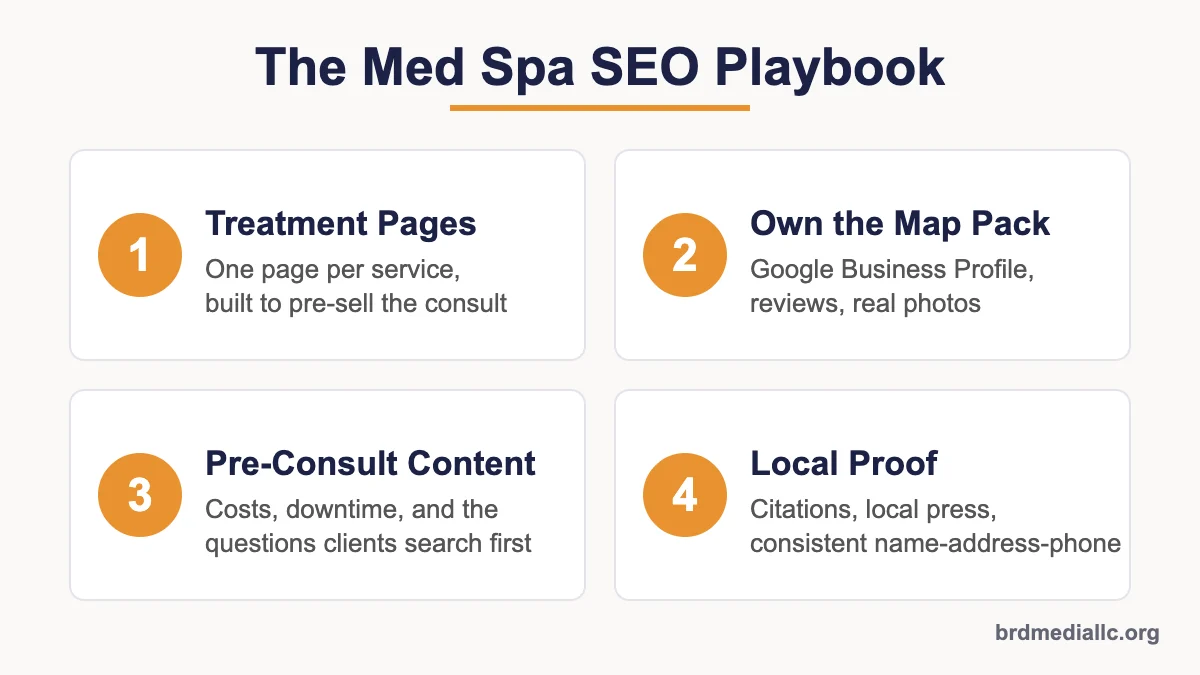
Four moves account for nearly all the results. Do these before anything else.
Every service you offer needs its own page: what it is, who it's for, what it costs, what recovery looks like, real photos. One "Services" page listing twelve treatments ranks for none of them. Twelve dedicated pages can each rank for their own search market.
Med spa searches are local and mobile, and the three map results above the regular listings take a huge share of the calls. Your Google Business Profile needs every treatment listed as a service, weekly photo posts, and a steady stream of reviews that mention specific treatments. Review velocity beats review count.
"Does Botox hurt." "How long does filler last." "Microneedling downtime." Clients search these questions days before they book, and the spa that answers them earns trust before any competitor gets a phone call. This content also feeds your treatment pages authority.
Consistent name, address, and phone across every directory. Citations on the platforms that matter for aesthetics. A mention in local press when you can get it. Google treats medical aesthetics as a high-stakes category, so verifiable credibility carries extra weight.
The most common med spa website is a brochure. Gorgeous photography, vague copy, one services page, zero answers. It impresses people who already found you and does nothing to get found.
Quick diagnostic:
Both work. They just do different jobs, and the order matters.
| SEO | Paid Ads | |
|---|---|---|
| Cost per new client | Drops as rankings build | Rises with competition |
| Time to results | 3–9 months locally | Days |
| Client intent | Researching, high trust | Interrupted or comparison-shopping |
| When you stop paying | Keeps producing | Stops cold |
| Best for | Treatment + "near me" searches | Promos, new-treatment launches |
The right structure runs them together: med spa PPC management fills the calendar while rankings build, and a real med spa lead generation system catches everything the traffic produces.
Rankings get the click. Booking friction kills the consult. Online scheduling, instant follow-up on form fills, and a same-day response to every inquiry are what turn search traffic into treatment revenue. A lead that waits until tomorrow books somewhere else tonight.
That's the system view: visibility, trust, and intake working as one machine. It's the same approach behind everything we build for med spa marketing clients.
Every treatment page, every review, and every answered question keeps working without another invoice. That's the whole argument of this med spa SEO guide: ads rent attention, rankings own it. The spas that start now will be uncatchable in their market in two years.
If you'd rather have it built than learn it, that's exactly what our med spa SEO service does.
Your next regular is searching for her first treatment right now.
BRD Media builds the whole organic system for med spas — treatment pages, map pack, reviews, and the booking flow that converts — so you stop depending on ads and algorithms you don't control.
Book a Free Strategy Call →Sources: Grand View Research: Medical Spa Market Report
Related: The same shift is hitting local health practices: how AI search is changing the way patients find providers.
SEO is the compounding layer, not the whole plan. For this month’s book, start with the run-first list of med spa marketing plays and let the rankings build underneath.
And where does SEO sit among everything else? We mapped the five-layer med spa marketing system that sequences it with offers, follow-up, and measurement.

Founder of BRD Media LLC, a Villa Park, IL digital marketing agency helping Chicago-area service businesses get organized, get found, and get more leads. Chris builds CRM and automation systems for local businesses across DuPage and Cook County.
See BRD Media first in Google
Add us as a preferred source and our SEO breakdowns rank higher in your own Search results, AI Mode and AI Overviews.