Why MedSpas Need Digital Marketing in 2026: Essential Strategies for Patient Growth
The medical aesthetics industry has undergone a dramatic transformation over the past decade, and 2026 marks a pivotal year for MedSpas seeking sustainable growth. Understanding why MedSpas need digital marketing is no longer optional. It’s the foundation of patient acquisition and long-term business success. From Botox treatments to body contouring, today’s patients begin their aesthetic journey online, researching providers, reading reviews, and comparing services before ever stepping foot in a clinic.
Running a med spa? Our guide to Facebook ads for med spas breaks down the offers, targeting, compliant creative, and pricing that fill a treatment calendar.
For MedSpa owners in Chicago and across the nation, the question isn’t whether to invest in digital marketing. It’s how to do it effectively while maintaining HIPAA compliance and maximizing return on investment. This guide explores the essential strategies that forward-thinking medical spas are using to attract new patients, retain existing ones, and build thriving practices in an increasingly competitive landscape.
The Evolving MedSpa Landscape in 2026
The medical aesthetics industry continues its remarkable growth trajectory, with the global market projected to exceed $30 billion by the end of 2026. This expansion brings both opportunity and challenge for MedSpa owners who must navigate an increasingly crowded marketplace while meeting elevated patient expectations.
Rising Competition in the Medical Aesthetics Industry
New MedSpas are opening at an unprecedented rate across major metropolitan areas. In Chicago alone, the number of medical aesthetic practices has increased by over 40% since 2020. This surge in competition means that exceptional clinical outcomes are no longer enough to guarantee a full appointment book. Practices must differentiate themselves through strategic digital marketing.
The competition extends beyond traditional MedSpas to include dermatology practices adding aesthetic services, plastic surgery offices expanding into non-invasive treatments, and even dental practices offering Botox. This diversification of competitors requires a sophisticated approach to marketing that clearly communicates your unique value proposition to prospective patients.
Patient Expectations for Digital-First Experiences
Today’s aesthetic patients conduct extensive online research before booking consultations. Studies show that 78% of patients research providers online for at least two weeks before making contact, with the average patient visiting five or more websites during their decision-making process. They expect seamless digital experiences, from intuitive website navigation to easy online booking systems.
Patients now demand transparency in pricing, authentic before-and-after galleries, detailed provider credentials, and genuine patient testimonials. Mobile optimization is critical, as over 65% of MedSpa website traffic now comes from smartphones. Practices that fail to meet these digital expectations lose potential patients to competitors who do.
That visibility starts with what shows up when someone searches your name, which is why actively managing your reviews and online reputation is no longer optional for a modern practice.
Why Traditional Marketing No Longer Works for MedSpas
Print advertisements, direct mail, and billboard campaigns, once staples of medical practice marketing, now deliver diminishing returns. The cost per patient acquisition through traditional channels has increased dramatically while targeting capabilities remain limited. A billboard in Chicago reaches everyone driving past, regardless of whether they’re interested in aesthetic treatments or can afford premium services.
Digital marketing fundamentally changes this equation by enabling precise audience targeting, real-time performance tracking, and continuous optimization. It’s not about abandoning all traditional methods. It’s about allocating resources where they generate measurable results and sustainable patient acquisition.
Core Digital Marketing Channels Every MedSpa Needs
Building an effective patient acquisition strategy requires a multi-channel approach that meets prospective patients at every stage of their decision journey. Each channel serves a distinct purpose in creating awareness, building trust, and converting interest into booked appointments.
Local SEO and Google Business Profile Optimization
Local SEO forms the foundation of sustainable patient acquisition. When someone searches “Botox near me” or “best MedSpa in Chicago,” your practice must appear prominently in local search results. This requires Google Business Profile optimization, including accurate business information, strategic category selection, regular post updates, and active review management.
Local SEO extends beyond Google to include Yelp, RealSelf, and healthcare-specific directories. Consistent NAP (name, address, phone) information across all platforms signals legitimacy to search algorithms while making it easy for patients to find and contact you. Practices that invest in local SEO typically see 40-60% of their new patient inquiries originate from organic search within 12 months.
Social Media Marketing for Visual Results
Instagram and TikTok have become essential platforms for MedSpa marketing, offering visual-first environments perfect for showcasing treatment results. Authentic before-and-after content, educational reels explaining procedures, and behind-the-scenes glimpses of your practice build trust and engagement with prospective patients.
Effective social media advertising includes strategic hashtag usage, consistent posting schedules, and engagement with local community accounts. User-generated content, patients sharing their experiences with permission, provides powerful social proof that resonates more strongly than polished promotional material.
Email Marketing and Patient Retention Campaigns
While acquiring new patients drives growth, retaining existing patients builds profitability. Email marketing enables personalized communication that nurtures patient relationships over time. Birthday offers, treatment anniversary reminders, seasonal promotions, and educational content keep your practice top-of-mind between visits.
Segmented email campaigns based on treatment history allow targeted messaging. Patients who received Botox six months ago can receive gentle reminders about touch-ups, while those who expressed interest in body contouring during consultations receive relevant educational content. This strategic approach typically achieves 3-5x higher conversion rates than generic broadcast emails.
Paid Search and Display Advertising
Google Ads and programmatic display advertising provide immediate visibility for competitive keywords that may take months to rank for organically. Strategic paid search campaigns targeting high-intent keywords like “lip filler consultation Chicago” or “laser skin resurfacing cost” capture patients actively seeking services. For the paid-search side, see our med spa PPC management service.
Display retargeting keeps your practice visible to website visitors who haven’t yet converted, reinforcing brand awareness throughout their research process.
Audio Advertising: The Untapped Opportunity for MedSpas
While most MedSpas focus exclusively on visual platforms, streaming audio advertising represents a significantly underutilized channel for patient acquisition. Streaming audio and podcast advertising offer unique advantages for reaching affluent, health-conscious audiences in environments where they’re highly receptive to messaging.
Why Streaming Audio Reaches Your Ideal MedSpa Patients
Streaming audio listeners skew toward the demographics that align perfectly with MedSpa target audiences: higher income, higher education, and active interest in wellness and self-improvement. Unlike visual advertising where attention is divided, audio advertising commands focused attention during commutes, workouts, and daily routines.
Platforms like Spotify, Pandora, and SiriusXM offer sophisticated targeting options that enable MedSpas to reach listeners based on age, gender, location, income level, and interest categories. This precision targeting ensures your advertising budget reaches qualified prospective patients rather than broad audiences with minimal conversion potential.
Podcast Advertising for High-Intent Wellness Audiences
Podcast listeners demonstrate exceptional brand recall and purchase intent, with studies showing host-read advertisements achieve up to 4.4x better brand recall than traditional audio ads. Wellness, beauty, and lifestyle podcasts attract audiences already invested in self-improvement, making them ideal prospects for aesthetic treatments.
Strategic podcast placements allow MedSpas to align with trusted voices in the wellness community. When a beloved podcast host personally recommends your practice, that endorsement carries weight that traditional advertising cannot replicate.
Digital Radio Targeting by Demographics and Behavior
Digital radio has evolved far beyond traditional broadcast limitations. Programmatic audio buying enables real-time bidding on advertising inventory across thousands of stations and streaming services, with targeting parameters as sophisticated as any digital display campaign.
Geographic targeting can be refined to specific neighborhoods known for affluent demographics, while behavioral targeting reaches listeners who have demonstrated interest in beauty, wellness, and luxury services. This granular approach makes audio advertising a viable channel even for MedSpas with limited marketing budgets.
Case Study: MedSpa Patient Acquisition Through Audio Ads
A Chicago-based MedSpa implemented a streaming audio campaign targeting women aged 35-54 within a 15-mile radius of their practice. The campaign featured :30 spots promoting a complimentary consultation offer, running across Spotify and local digital radio stations during morning and evening commute hours.
Over a 90-day campaign period, the practice generated 127 consultation requests directly attributed to audio advertising, with a cost per lead 34% lower than their concurrent Google Ads campaigns. The average treatment value from audio-acquired patients exceeded $2,400, demonstrating the channel’s effectiveness for reaching qualified, high-value prospects.
Advanced Targeting Strategies for MedSpa Marketing
Hyper-Local Neighborhood Targeting in Chicago and Beyond
Not all neighborhoods are created equal when it comes to MedSpa patient potential. Affluent areas like Lincoln Park, Gold Coast, and the North Shore suburbs in Chicago represent concentrated target markets where residents have both the disposable income and interest in aesthetic treatments.
Advanced geofencing technology allows advertising to reach devices within specific geographic boundaries, whether targeting luxury shopping districts, upscale fitness centers, or competitor locations. This hyper-local approach maximizes advertising efficiency by focusing budget on areas with the highest concentration of qualified prospects.
Behavioral and Interest-Based Audience Segmentation
Digital advertising platforms collect vast amounts of behavioral data that reveal consumer interests and purchase intent. Targeting users who have recently searched for skincare products, visited beauty websites, or engaged with wellness content significantly improves campaign performance compared to demographic targeting alone.
Layering behavioral signals with demographic and geographic parameters creates highly refined audience segments. A 45-year-old woman in Naperville who recently searched for “anti-aging treatments” and follows skincare influencers represents a far more valuable advertising target than a generic demographic match.
Lookalike Audiences Based on Current Patient Data
Your existing patient database contains valuable signals about who is most likely to become a patient. Facebook and other advertising platforms can analyze this data to identify common characteristics and find new users who share similar attributes, creating “lookalike” audiences with dramatically higher conversion potential.
This approach requires proper data handling to maintain HIPAA compliance, but when implemented correctly, lookalike audiences consistently outperform standard targeting methods by 2-3x for MedSpa patient acquisition campaigns.
Seasonal Campaign Timing for Maximum Impact
Patient demand for aesthetic treatments follows predictable seasonal patterns. Botox consultations surge before holiday party season, body contouring interest peaks as summer approaches, and skin rejuvenation treatments see increased demand following summer sun exposure.
Strategic campaign timing aligns advertising investment with periods of peak patient intent, maximizing return on marketing spend. This requires advance planning. Campaigns promoting summer body treatments should launch in early spring to capture patients during their research phase.
HIPAA-Compliant Retargeting for Patient Privacy
Understanding HIPAA Compliance in Digital Advertising
HIPAA protects individually identifiable health information from unauthorized disclosure. In digital advertising, this means MedSpas cannot use protected health information (PHI) to target advertisements, even when that information was collected during legitimate patient interactions.
Retargeting based on general website visits typically does not violate HIPAA, as visiting a MedSpa website does not constitute PHI. However, retargeting users who visited specific treatment pages or submitted consultation requests requires more careful consideration of compliance requirements.
Safe Retargeting Methods That Protect Patient Information
Privacy-compliant retargeting focuses on general website engagement rather than health-specific behaviors. Instead of retargeting users who viewed the “Botox treatment” page specifically, compliant approaches retarget all website visitors with general brand awareness messaging.
Working with advertising partners who understand healthcare compliance requirements ensures proper implementation.
Dynamic Retargeting Funnels Without Compromising Privacy
Sophisticated retargeting funnels can be built without relying on sensitive health information. By tracking engagement levels, time on site, pages visited, return visits, rather than specific treatment interests, MedSpas can deliver increasingly personalized messaging while maintaining strict privacy compliance.
First-touch visitors might see general brand awareness ads, while high-engagement visitors who’ve spent significant time exploring your site receive stronger calls-to-action promoting consultation scheduling. This progressive approach respects privacy while maximizing conversion potential.
Best Practices for Consent and Data Management
Transparent data practices build patient trust while ensuring regulatory compliance. Clear privacy policies, explicit consent mechanisms for marketing communications, and proper data security protocols form the foundation of compliant digital marketing operations.
Regular audits of advertising pixels, tracking technologies, and data sharing arrangements help identify and address potential compliance gaps before they become problems.
CRM Integration and Marketing Automation
Connecting Your Patient Management System to Ad Platforms
Most MedSpa practice management systems can integrate with major advertising platforms through direct connections or intermediary tools. These integrations enable automatic audience syncing, conversion tracking, and campaign optimization based on actual patient acquisition data rather than proxy metrics.
When your CRM communicates with Google Ads, for example, the platform can optimize campaigns toward users most likely to become patients, not just website visitors or form submitters, but actual scheduled consultations and completed treatments.
Automated Follow-Up Sequences for Consultation Requests
Speed matters when responding to consultation requests. Marketing automation for medical spas enables immediate response sequences that engage prospects while interest is high, then nurtures those who don’t immediately book with strategic follow-up messaging.
A well-designed automation sequence might include immediate confirmation emails, educational content about requested treatments, social proof from satisfied patients, and progressively stronger calls-to-action for prospects who haven’t yet scheduled. This systematic approach captures patients who might otherwise slip away during the research process.
Tracking Patient Journey from Ad Click to Appointment
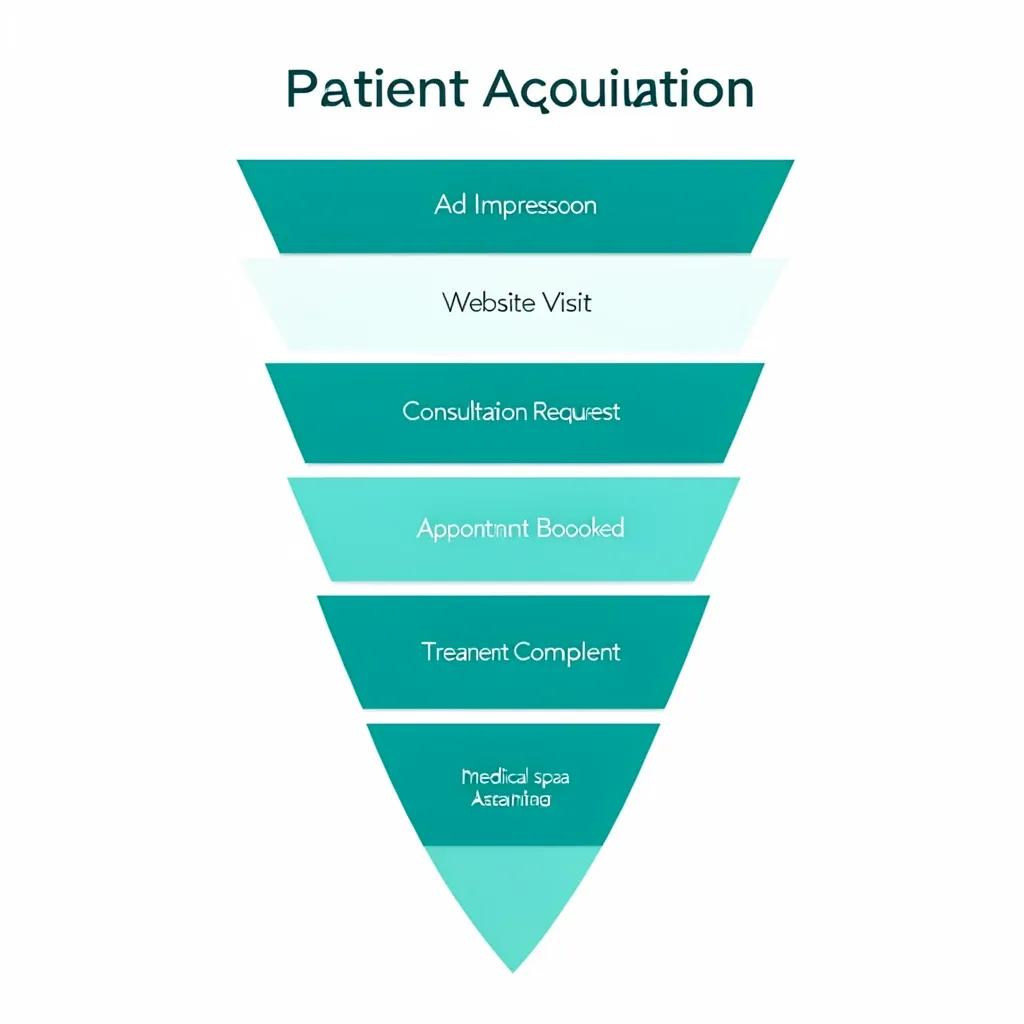
Understanding the complete patient journey, from first ad impression through scheduled appointment and completed treatment, enables intelligent marketing investment decisions. Without this visibility, MedSpas often over-invest in channels that generate clicks but not patients, while under-investing in channels that drive actual revenue.
Comprehensive tracking requires proper UTM parameter implementation, CRM integration, and potentially call tracking for phone inquiries. The investment in proper attribution infrastructure pays dividends through dramatically improved marketing efficiency.
Real-Time Dashboard Reporting for ROI Visibility
Marketing dashboards that consolidate data from all channels provide at-a-glance visibility into campaign performance. Real-time reporting enables quick identification of underperforming campaigns, allowing rapid optimization that maximizes return on marketing investment.
Effective dashboards track metrics that matter for MedSpa success: cost per lead, cost per consultation, cost per new patient, and patient lifetime value by acquisition channel. These insights inform both tactical campaign adjustments and strategic marketing budget allocation.
Guaranteed Performance Models: Risk-Free MedSpa Marketing
How Performance-Based Advertising Works
In performance-based arrangements, payment ties directly to measurable outcomes: leads generated, consultations scheduled, or patients acquired. This structure eliminates the risk of paying for marketing that doesn’t deliver results while motivating agencies to continuously optimize campaign performance.
Pay-Per-Lead vs. Pay-Per-Click: What MedSpas Should Choose
Pay-per-click models charge for website traffic regardless of quality, while pay-per-lead models charge only when that traffic converts into actionable inquiries. For MedSpas focused on patient acquisition, pay-per-lead arrangements typically deliver superior ROI by shifting quality risk to the marketing partner.
Setting Realistic KPIs and Success Metrics
Successful partnerships require clearly defined success metrics agreed upon in advance. Industry averages suggest MedSpa cost-per-lead ranges from $50-150 depending on treatment type and market competitiveness, with consultation rates of 30-50% and treatment conversion rates of 40-60% for well-run practices.
Why Guaranteed Results Change the Game for Small MedSpas
Smaller MedSpas often hesitate to invest in digital marketing due to uncertainty about results. Guaranteed performance models eliminate this barrier by ensuring marketing investment translates directly into patient growth. This risk-sharing approach has enabled countless practices to scale patient acquisition that traditional retainer arrangements made prohibitively risky.
Related reading: CRM for small business. · Med Spa SEO Guide: How New Clients Find You First · Google Reviews Without Breaking HIPAA · Building a Physician-Referral Pipeline Online
Related: turn that demand into booked consults with our med spa lead generation service.
Vetting outside help? Start with our ranked breakdown of the best med spa marketing agencies for 2026.