Lead Generation Strategies That Actually Work for Service Businesses
Most lead generation advice you'll read online is written by someone selling the strategy they're describing. Which is why every blog post says THEIR channel is the answer. The honest truth is messier: there are five channels that genuinely work for service businesses, they each fit different situations, and the right move depends as much on your budget as on your industry.
Here's what actually generates leads in 2026, which strategies fit which budget level, and the mistakes that quietly waste most of what small businesses spend on lead gen.
What Lead Generation Actually Means (and What It Isn't)
Lead generation is the work of getting prospective customers to raise their hand — a form fill, a phone call, a booked consultation. That's it. It's not brand awareness, it's not impressions, it's not "exposure." Awareness can support lead gen, but the metric that matters is contacts who told you they're interested.
The reason this distinction matters: every lead-gen strategy below should be measured the same way. Did it produce people who reached out? If a tactic is generating engagement, traffic, or followers but no booked appointments, it isn't lead generation. It's marketing that hasn't connected to revenue yet.
The Five Channels That Actually Generate Leads
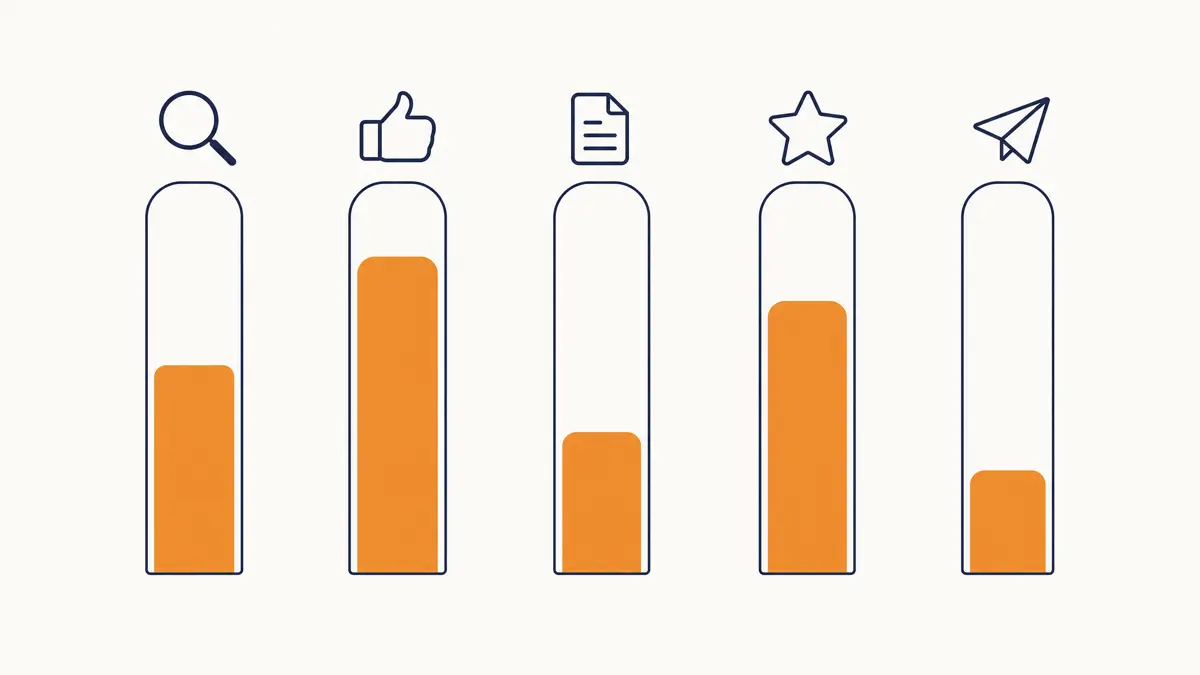
For service businesses in 2026, lead generation almost always comes from some combination of these five. The others (TV, billboards, sponsorships) can support but rarely drive lead volume on their own.
1. Paid search (Google Ads)
Someone types "emergency plumber near me" and you show up at the top of the results. This is the highest-intent traffic on the internet because the searcher is actively trying to hire someone. Lead costs vary by industry (often $30 to $200 per lead for local services), but the leads are warm and convert well.
Best for: businesses where customers actively search for the service. Plumbers, attorneys, dentists, HVAC, urgent-need services. Not great for businesses where customers don't know they need you yet.
2. Paid social (Meta Lead Ads, landing pages)
Facebook and Instagram ads with a built-in form, or ads sending traffic to a focused landing page. Lower intent than search (the person wasn't looking for you), but you can hit specific demographics for far less per lead, often $5 to $40. Great for visual services, offer-driven campaigns, and businesses where you create the demand.
Best for: medspas, fitness, consumer services, anyone with a strong offer or a visual product. Our Facebook ads management for Chicago service businesses walks through this in detail.
3. SEO and content
Organic search traffic from the work of ranking for the questions and searches your customers run. Slower than paid (3 to 6 months minimum to see meaningful results), but the leads cost nothing per click once it's working, and the asset compounds.
Best for: businesses with time to invest, recurring or high-value customers, and topics customers actually search. Not great if you need leads this month.
4. Referrals and reviews
Underrated, undermarketed, and usually the highest-converting source a service business has. The work is making it easy for happy customers to refer you and ensuring your reviews look better than the alternatives when someone Googles you. Cheap, but not free — it requires a real system, not just hoping.
5. Direct outreach
Cold email, cold calls, LinkedIn outreach. Works for B2B with a high deal size; rarely works for local consumer services. If a $50,000 contract is on the line, hand-prospecting 100 ideal companies is reasonable. If you sell $200 services, the math doesn't work.
Best Lead-Gen Strategy by Budget Tier
The biggest mistake small businesses make is picking a channel based on what sounds good rather than what fits their budget. Here's what actually works at each spending level.
| Monthly budget | Best strategy | Why |
|---|---|---|
| Under $500 | Reviews + referrals system + Google Business Profile | You can't outbid competitors on paid channels at this level. Win on the free stuff first. |
| $500 to $2,000 | ONE paid channel done well (usually Google Ads) | Focus beats spread. One channel at $1,500/mo will outperform three channels at $500 each. |
| $2,000 to $5,000 | Paid search + paid social, with a real landing page | Two channels covering both intent levels, plus a conversion-optimized place to send traffic. |
| $5,000 to $10,000 | Paid + retargeting + SEO investment starting | Now you can fund the slow-burn SEO work while paid carries the immediate lead volume. |
| $10,000+ | Full system: paid, SEO, content, automation, CRM | This is where the channels actually compound. Anything less and you're underfunding pieces. |
The tight-budget reality
If you're under $500 a month, paid lead generation will rarely work. The math is brutal: average cost per click in many service industries is $5 to $20, which means $500 buys you 25 to 100 clicks, and you need clicks to convert to leads. The strategy at that level is not "cheap paid ads." It's making absolutely sure your Google Business Profile is dialed in, you have a real system asking every customer for a review, and you're actively asking for referrals after every job. That's the floor. Add paid when there's a real budget for it.
The one-channel discipline
The single most common waste at the $500 to $2,000 range is spreading across three channels at once. Half-funded Google Ads, half-funded Facebook ads, and a half-finished SEO project all underperform because none of them gets enough oxygen. Pick one, fund it properly, prove it works, then add the second.
The Five Lead-Gen Mistakes Wasting Most of Your Budget
Before you change your strategy, check whether any of these is quietly eating what you're already spending.
1. Sending paid traffic to your homepage. Your homepage is built to introduce the business; a landing page is built to convert. Same traffic to a real landing page often doubles or triples lead rate.
2. Forgetting to follow up fast. A lead's interest decays by the hour. If you're not contacting new leads within 5 to 15 minutes, you're losing them to whoever does. This is exactly why automated follow-up exists.
3. Targeting too broadly. "Adults 25 to 65 in Chicago" is not a target. "Homeowners in DuPage County with pre-2000 HVAC units" is. The more specific the audience, the lower the lead cost.
4. Optimizing for the wrong metric. Cost per click is not the goal. Cost per booked appointment is. A campaign with $8 clicks that convert is better than a campaign with $2 clicks that don't.
5. Quitting too early on the channels that take time. SEO takes months. Paid takes weeks of testing. Killing a channel at 60 days because it hasn't paid off is one of the most expensive mistakes a small business makes.
How to Measure If It's Actually Working
The numbers that matter are not impressions, clicks, or engagement. They're these four:
Leads per month, total contacts who reached out from each channel.
Cost per lead, total spend on a channel divided by leads it produced.
Lead-to-customer conversion rate, what percent of leads become paying customers.
Cost per acquisition (CPA), what one new customer costs you all-in. This is the metric that tells you whether the strategy is profitable.
If you don't know these four numbers for each channel you're running, you're not measuring lead generation, you're just spending. Most small businesses can dramatically improve results just by starting to track them.
How Long Until Lead Gen Pays Off?
Paid channels (Google Ads, Meta) usually start producing leads within the first 2 to 4 weeks, with another 4 to 8 weeks of optimization to hit efficient cost per lead. SEO is a 3 to 6 month investment before meaningful traffic, 9 to 12 months for compounding results. Referrals and reviews build steadily over months but never produce a sudden surge.
If you need leads in 30 days, paid is your only realistic answer. If you can think in quarters, the right play is to start paid for immediate volume while building SEO and reviews in parallel so you're not stuck on paid forever.
The Bottom Line
There's no single "best" lead generation strategy, there's the one that fits your budget, your timeline, and your industry. The five channels above are the real list. The budget tiers above are honest about what each level can actually do. And the mistakes above are where most small business lead-gen budgets quietly leak away.
If you want help figuring out which channels and what budget would fit your specific situation, that's what our lead generation services for service businesses exist to do. The first conversation is about what makes sense, not selling you a package.