
A dental patient reactivation mailer is one of the few marketing pieces where a practice already holds the audience. The people on the list came in, sat in the chair and left. Some leave over a problem. Many simply move, get busy, change insurance or let the recall slip. A card that arrives at the right time, says the right thing and makes booking easy can bring a share of them back. The catch is the wording. This post walks through the list, the offer, the card and the count.
Pick a definition and write it down, because the card, the list and the measurement all depend on it. A common starting point is a patient whose last visit was longer ago than the practice's usual recall interval plus a grace period. The number of months is your team's decision, not a standard. What matters is that the same rule is applied every time you build the list.
Then remove the people who should not get a card at all:
Next, correct the addresses. A card sent to an old address is wasted postage and can put a patient's name in front of a stranger. Run the list through an address-correction step with your mail house or the postal service tools it uses. The postal service publishes its Marketing Mail eligibility and content standards, which your printer will already follow, so it is worth a read before you choose a format.
This is the part the other pages skip. A reactivation card is advertising, and dental advertising is regulated by your state. Rules differ from state to state, so confirm yours with your state dental board and your counsel. Within that limit, here is a safe way to think about it.
Offers that rarely cause trouble are about access. A reserved appointment time, extended hours for returning patients, a quick check of what the patient's coverage still allows, or a friendly note that the practice has openings this month. These tell the patient the door is open without attaching a financial or clinical claim.
Offers to be careful with:
One federal point is worth knowing. HIPAA's definition of marketing excludes a covered entity's communications about the health-related products and services it provides itself, unless the practice is paid by a third party whose product or service is being promoted. A practice writing to its own patients about its own services is therefore, within the limits of the rule, in a different position from one that mails on behalf of someone else. The print vendor is another matter, because it handles patient names and addresses. We cover that question in our HIPAA-compliant marketing primer, and your counsel should confirm the arrangement.
Short beats clever. A patient reads a card in a few seconds on the way from the mailbox to the counter.
Write it in the voice of the front desk, not an agency. Use the patient's first name if your list is accurate. Skip exclamation marks and anything that reads like a coupon. If the practice has a dentist the patient knows by name, the name belongs on the card.
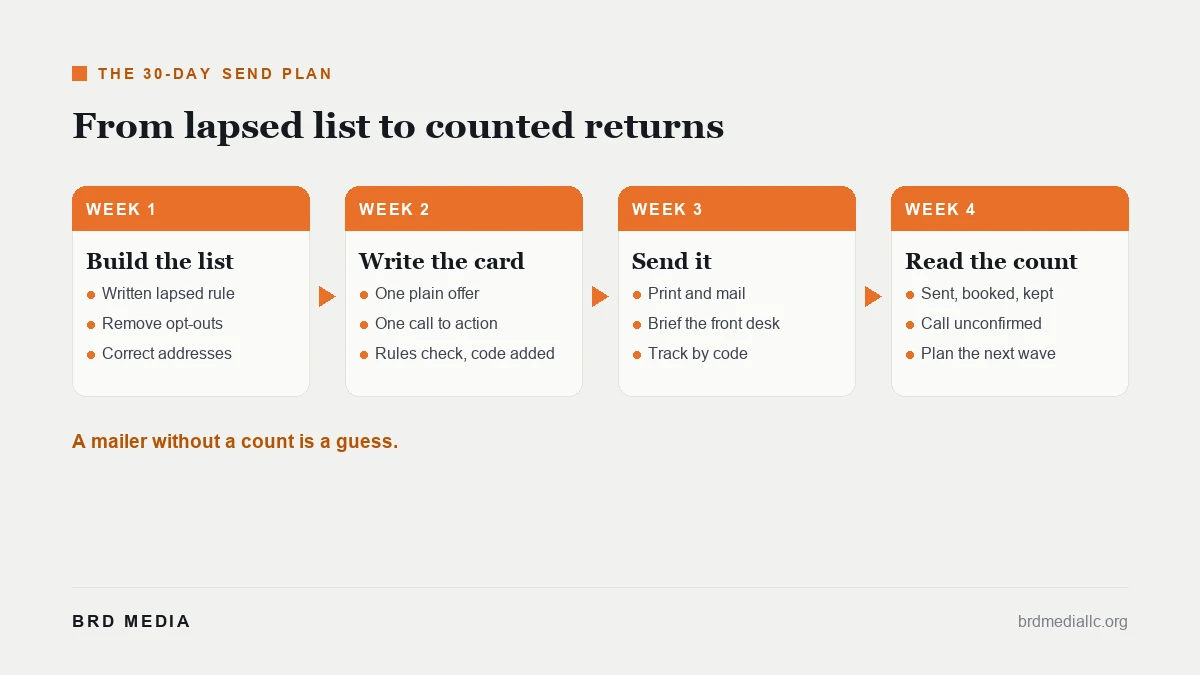
A mailer without a count is a guess. Give each mailing wave its own code, and use one tracking number per wave if your phone system allows it. Then record four things every week.
| Measure | Where it comes from | What it tells you |
|---|---|---|
| Cards sent | The cleaned list count | The denominator for everything below |
| Calls or codes used | Tracking number log and front desk notes | Whether the card got a reaction |
| Appointments booked | The schedule, tagged by code | Whether the reaction turned into a visit |
| Appointments kept | The schedule after the visit date | Whether the patient came back |
Be careful with response rates you read elsewhere. The figures you read on other pages conflict with each other. Your own count from the table is the only one that applies to your practice. After the first wave, compare booked to kept. A drop from booked to kept points at the reminder and confirmation process, not at the card.
The honest take: a mailer reaches only the people who still live where your records say they do and who open their mail. It is one channel. Pair it with a phone call to the same segment, or a text only where your consent records allow it, and look at the practice's recall routine, because a steady recall process means fewer patients lapse in the first place.
Reactivation sits next to recall, reviews and new-patient search. Our guides to dental marketing ideas and dental marketing strategies cover the rest of that list, and the piece on attracting cosmetic cases without discounting goes further on why access beats price in dental offers. If you want a team to run the whole system, see our dental marketing services. Engagements start at $2,500 a month on a six-month term; the three tiers are on our pricing page. Ad spend is separate and belongs to you.
Send us your current recall routine and the card you used last. We will tell you what to keep, what to cut and how to count the returns.
Book a consultSources: USPS Domestic Mail Manual 243, Marketing Mail prices and eligibility · 45 CFR 164.501, definitions (marketing)
See BRD Media first in Google
Add us as a preferred source and our SEO breakdowns rank higher in your own Search results, AI Mode and AI Overviews.