
Updated July 2026
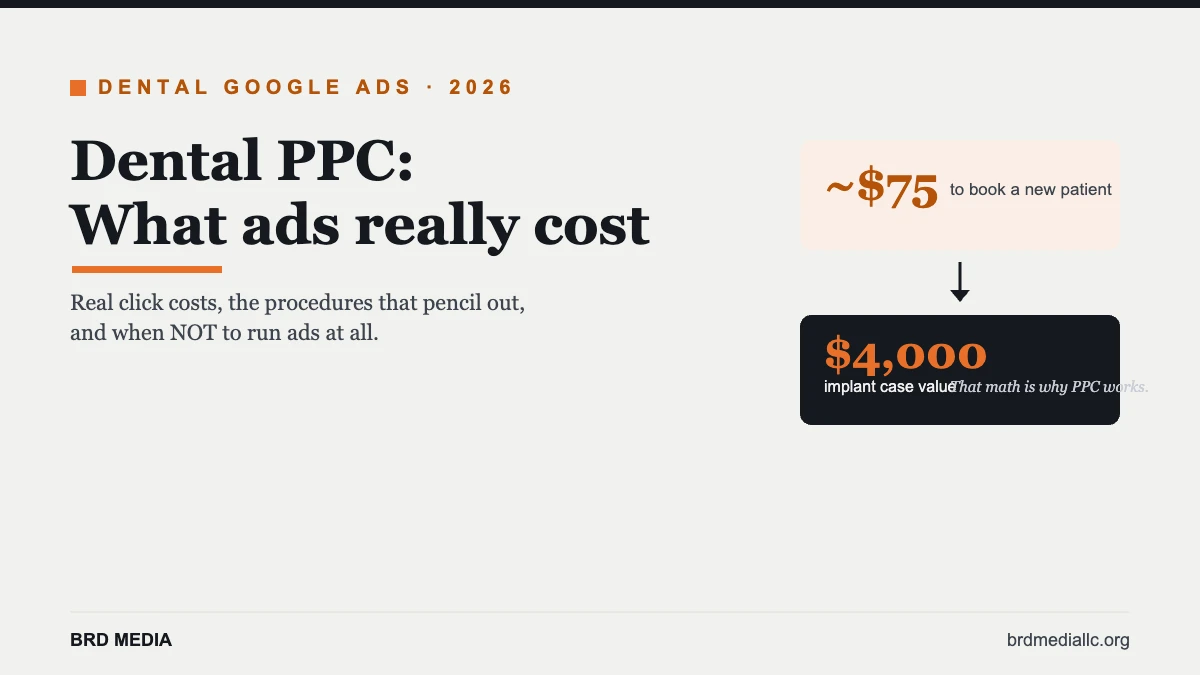
Dental PPC, running Google Ads for a dental practice, is either the fastest new-patient tap you have or the fastest way to burn a budget. The difference is almost never the ads themselves. It is what you point them at, which procedures you chase, and whether you can measure what comes back. This guide gives the real numbers, the procedures that actually pencil out, and the honest cases where you should not run ads at all.
Here are real numbers, not ranges pulled from a template. Dental keyword clicks run roughly $15 to $45 depending on how competitive your market is. A booked new patient from ads commonly lands around $75, though it moves with the procedure and the market. That $75 is a bargain for a $4,000 implant case and brutal for a $150 cleaning. That single comparison is the whole logic of dental PPC.
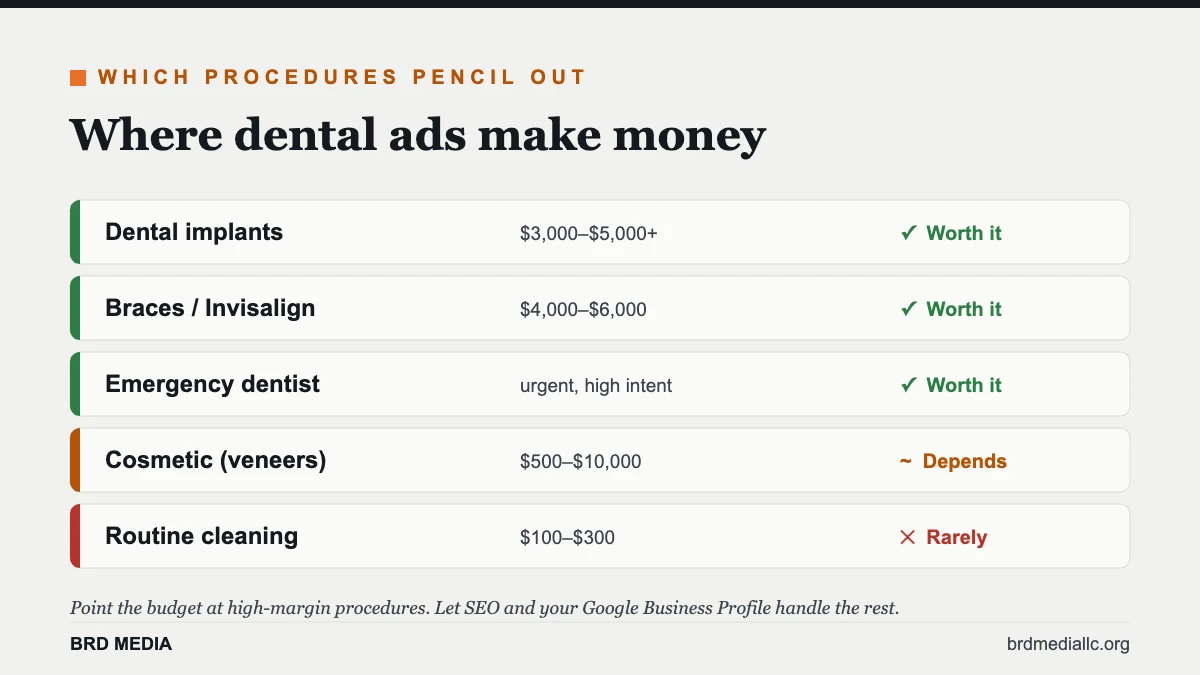
Google Ads are worth it where the margin is high enough to absorb the cost per patient. That means implants, braces, and Invisalign-style clear aligners. High case value carries the ad spend easily. Low-value, high-volume services like routine hygiene rarely justify paid clicks, because the cost per booked patient eats the margin. Point your ad budget at your high-value, high-margin procedures and let SEO and your Google Business Profile handle the rest.
| Procedure | Typical case value | Ads pencil out? |
|---|---|---|
| Dental implants | $3,000 to $5,000+ | Yes — high value absorbs the cost |
| Braces / Invisalign | $4,000 to $6,000 | Yes — high lifetime value |
| Cosmetic (veneers, whitening) | $500 to $10,000 | Usually, depends on the case |
| Emergency dentist | Varies | Yes — urgent, high intent |
| Routine hygiene / cleaning | $100 to $300 | Rarely — the cost eats the margin |
This is the part most guides skip. Do not turn ads on until your site is optimized and your SEO foundation is in place. Ads send expensive traffic to whatever page you point them at, and if that page is slow, unclear, or generic, you are paying to lose people. Get the foundation right first, then use ads to grab the high-value procedure flow while your dental SEO compounds underneath.
What you send traffic to matters as much as the ad. The homepage is built for everyone, so it converts worse than a page built for one thing. A patient who clicked an implant ad should land on a page about implants, with the answer, the reassurance, and an easy way to book. Match the landing page to the campaign goal and the specific service, every time. If you need those pages built, that is what landing page design is for.
A clean dental campaign is built by procedure, not one big bucket. Tight ad groups per procedure, exact and phrase match instead of broad, and an aggressive negative-keyword list that blocks job seekers, dental schools, and DIY searches. Set a geographic radius around the practice and weight the schedule toward the hours your front desk can actually answer the phone. Most wasted dental ad spend comes from broad match with no negatives pointed at a homepage.
If you cannot tie ad spend to booked patients, you cannot tell what is working, so you cannot cut what is not. Use call tracking and conversion tracking, then import those bookings back so you are measuring cost per booked patient, not cost per click. Clicks and even calls are not the goal. Booked chairs are. This is the same attribution-first discipline we bring to every account.
If the budget is limited, build the SEO and Google Business Profile foundation first, because it is the durable, compounding source of new patients. Then layer ads on top to capture the immediate, high-value procedure demand that you do not want to wait six months for. Ads are the accelerator, not the engine.
One more thing before you spend: ads and organic run on the same research. Our breakdown of the dental keyword map we build organic campaigns on shows which terms deserve their own page and which are worth paying for, so your budget follows demand instead of guessing at it.
Paid clicks are the fastest lever and the most expensive one. Before you raise the budget, work through the free plays to fix before you buy clicks, because ads pointed at a phone nobody answers and a stale Google profile just cost more per patient.
See how BRD manages paid search, with tracking tied to booked patients.
See Google Ads managementCost figures reflect BRD Media's real dental campaign data and market observation. Benchmarks vary by market and procedure.
See BRD Media first in Google
Add us as a preferred source and our SEO breakdowns rank higher in your own Search results, AI Mode and AI Overviews.